
A Real Night at DeRAMA Singapore: Why 24/7 Nursing Care Matters Most After Birth

본문
A Real Night at DeRAMA Singapore: Why 24/7 Nursing Care Matters Most After Birth
What follows is a real account of one night at DeRAMA Singapore. The details have been anonymised to protect our client's privacy, but the events, and the care that surrounded them, are exactly as they happened. We share it because it captures something that is easy to describe and hard to prove: what round-the-clock nursing care actually looks like when it matters.
By the time your baby arrives, you will have prepared for so much. What is easy to overlook is how much can still change in the quiet hours after birth, when the house is asleep and you are simply trying to rest. The first weeks of postpartum recovery are a period of rapid physiological change. Most of it is gentle and unremarkable. But occasionally something shifts that needs attention quickly, and in those moments the question is not how beautiful the room is. It is whether someone with the training to recognise it, and the experience to respond, is already there. The night below is one example of exactly that.
This is the single most important reason DeRAMA Singapore hires only nurses who are registered with the Singapore Nursing Board (SNB). Not all care staff are the same. An SNB-registered nurse has met Singapore's national clinical standards and holds the training to assess a situation, recognise a warning sign, and act on it. This is a deliberate choice: we do not staff our nursery with confinement nannies or unregistered caregivers. When a mother or newborn needs genuine clinical judgement at two in the morning, the difference between a Singapore-registered nurse and lesser-qualified care is not a detail. It is everything. The night that follows shows precisely why we hold to this standard without exception.
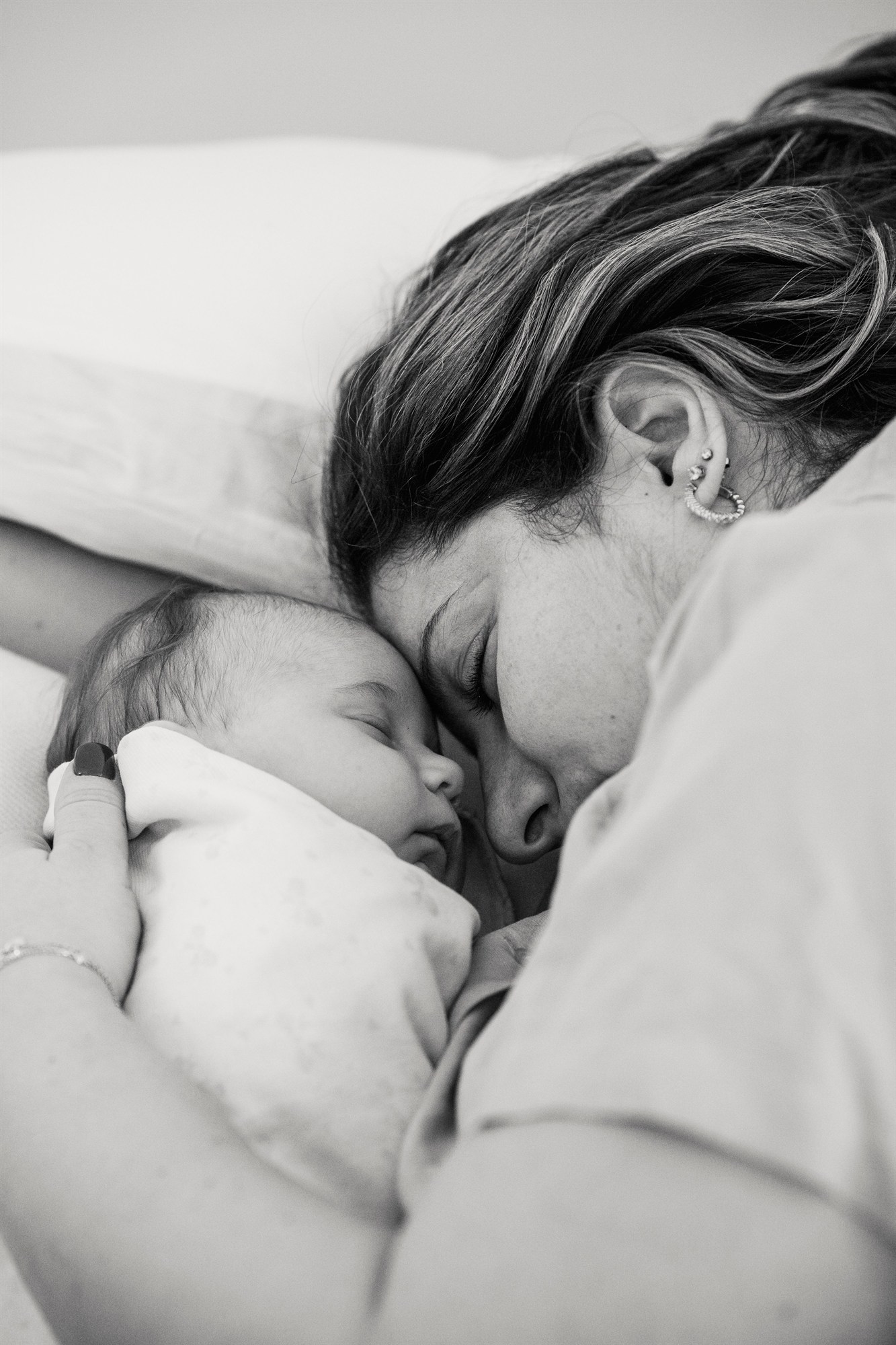
What Can Change in the Early Postpartum Weeks
Most of recovery happens beneath the surface. The uterus contracts steadily back towards its pre-pregnancy size, the early postpartum bleeding (known as lochia) gradually settles, and hormone levels recalibrate day by day. None of this is on show. It is simply happening while you hold your baby.
Usually this unfolds without incident. But the same period also carries a small number of risks that can develop faster than expected, and one of the most important to understand is postpartum bleeding.
Why Postpartum Bleeding Deserves Close Attention
Some bleeding after birth is entirely normal. What matters is the pattern. A sudden increase, bleeding that soaks through more than expected, or bleeding paired with dizziness or a racing heart can signal postpartum haemorrhage, one of the more serious complications of the early weeks. It can begin gently and escalate within minutes.
The difficulty is that it does not always look alarming at first. The body compensates, so a mother may feel only tired or light-headed while something more significant is underway. Recognising the early signs takes a trained eye that knows what normal recovery looks like, and therefore notices the moment it stops being normal. This is precisely the kind of judgement that continuous, professional nursing care exists to provide.
What Experienced Nursing Care Looks Like: A Real Night at DeRAMA
This is a real event that took place at DeRAMA Singapore. All client-identifying details have been removed to protect privacy, but the sequence of care is recounted as it happened.
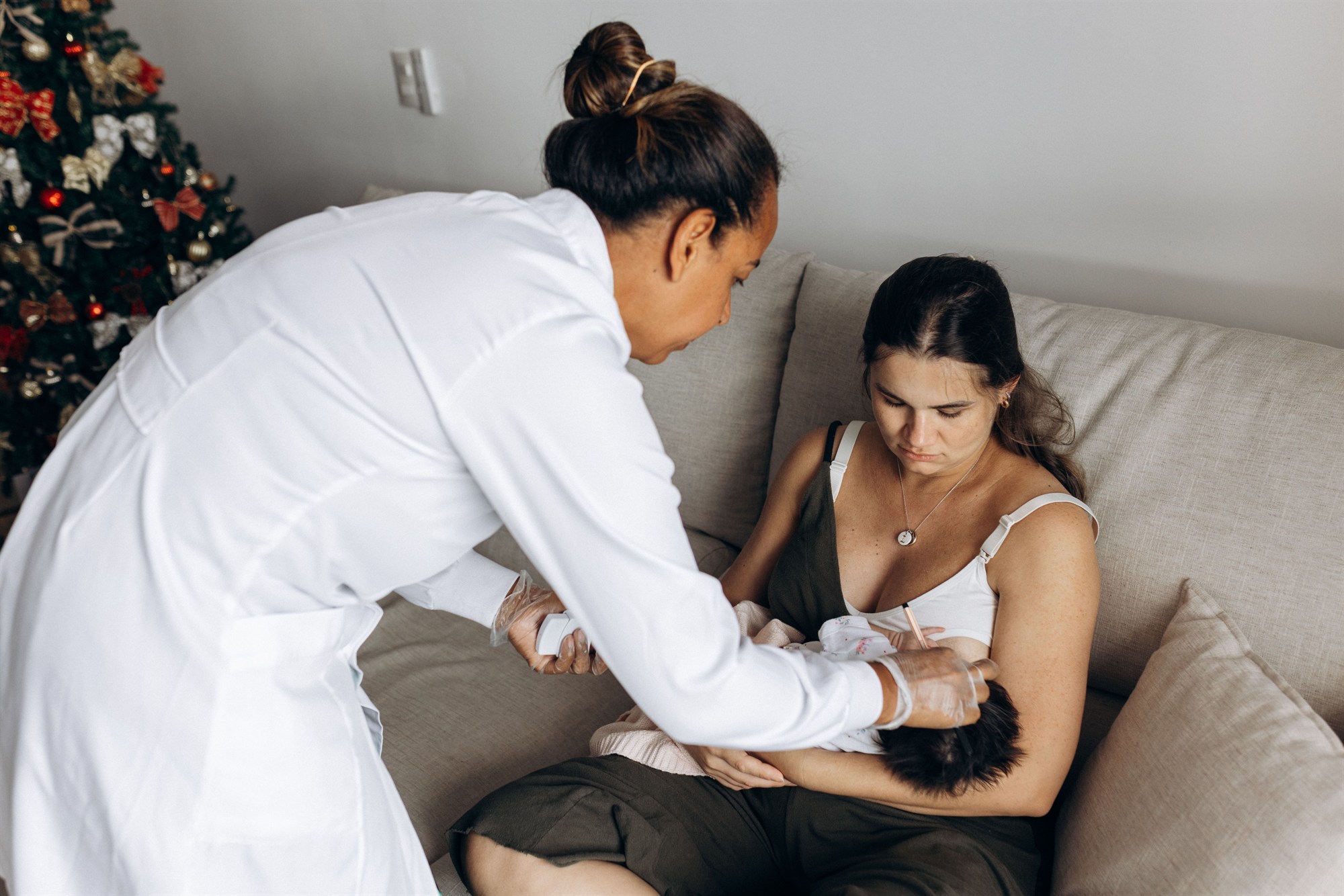
One evening at DeRAMA, a mother's husband let our nursing team know that she had been experiencing increased bleeding for about half an hour. Within two minutes, a registered nurse was at her bedside to assess the situation and check her vital signs.
What happened next is the part worth noticing. The nurse did not simply observe and hope it settled. Drawing on training and experience, she set up a structured monitoring plan, checking vital signs at fifteen-minute intervals, and explained it clearly to both parents: what was happening, why postpartum bleeding occurs, the signs that would prompt a hospital review, and what the next step would be if it came to that. The family understood the plan, which meant they could make decisions calmly rather than anxiously.
The team also prepared the next step before it was needed. Transport was arranged on standby, so that if a hospital review became necessary, there would be no delay. When the decision was made to proceed with an urgent specialist assessment, the mother was taken to hospital without any scramble for logistics. She was reviewed by a doctor, and on her return the nursing team received a full handover of the assessment and prescribed medications, then continued close monitoring through the night.
There was no single dramatic moment here, and that is the point. What protected this mother was the whole sequence handled well: rapid assessment, clear communication, steady monitoring, and an escalation plan ready in advance. None of it was improvised. It reflected a nurse trained for exactly this, whose experience told her what to do before the situation demanded it.
Why Experience Is What You Are Really Choosing
A beautiful suite matters. Restorative nutrition matters. But the part that protects you when something unexpected happens is the person at your bedside, and how well prepared she is to handle it.
Continuous Observation, Day and Night
Recovery does not pause at night, and neither should the people watching over it. Around-the-clock registered nurses mean that a change is noticed early, against a continuous baseline, rather than discovered hours later. That early recognition is often what keeps a manageable situation from becoming a serious one.
The Judgement to Know When to Escalate
Good nursing care is not about handling everything in-house. It is about knowing, calmly and quickly, when a situation calls for specialist review, and acting on it without hesitation. Recognising when to refer, and preparing for it in advance, is itself a mark of clinical experience.
Communication That Keeps a Family Calm
An emergency feels frightening largely because it feels uncertain. An experienced nurse keeps parents informed throughout, explaining what is happening and what comes next, so a family can face the moment with clarity instead of fear.
This Is the Standard DeRAMA Was Built Around
DeRAMA Singapore, a luxury confinement centre on the 12th floor of Artyzen Singapore, was designed around exactly this principle: that a mother should be able to rest fully, knowing that whatever the night brings, someone trained to handle it is already there.
Registered and enrolled nurses are on hand around the clock, working to clear clinical protocols and escalation criteria refined over twenty years of practice. They sit within a wider programme of considered postpartum care, from Korean postnatal massage and freshly prepared confinement nutrition to a calm sanctuary in which genuine recovery is possible. Every part of it exists for a reason, and the nursing care is the reason a mother can let her guard down and simply recover.
Rest, Knowing You Are Not Alone
The early postpartum weeks are a clinical period, not merely a restful one. Most of it passes gently, but the value of expert care shows precisely in the moments that do not, when calm, experienced judgement makes all the difference. You should never have to wonder whether the person caring for you will know what to do.
None of this has to be decided today. But if you are beginning to think about where and how you will recover, we would be glad to introduce you to the nursing team who would be caring for you and your baby. Learn more about our approach, or arrange a visit to see the space and meet the people behind the care. Even an early conversation tends to make everything that follows feel clearer.
This article is for general educational purposes and does not constitute medical advice. If you experience heavy bleeding, dizziness, or any concerning symptoms after birth, seek immediate medical attention. In Singapore, call 995 for emergencies.