
Best and Worst Confinement Foods After C-Section

본문
In the first days after a Caesarean section, the body does something unusual with food. Digestion slows in response to anaesthesia, the abdomen is still tender, and even a simple meal can feel like an event. The incision is doing quiet work underneath, and milk is beginning to come in. What you eat during these weeks genuinely shapes how recovery unfolds.
Confinement food has long understood this. The principles behind it (warm, gently cooked, easily digested early on, more nourishing later) line up almost exactly with what modern surgical recovery looks for.
Why Confinement Food Matters After a C-Section
A Caesarean is, in plain terms, major abdominal surgery. The incision needs time to heal, blood loss during delivery needs to be replenished, anaesthesia slows digestion for the first few days, and milk supply is still establishing itself. All of this is happening in a body that has just been through nine months of work and is also feeding a newborn.
Food carries the load here in ways that are easy to overlook. Protein supports tissue repair. Iron helps replace what was lost. Warming, well-cooked meals help digestion settle. Hydration supports milk supply. Traditional confinement cooking arrived at these principles long before modern science explained them.
The Best Foods to Eat During Confinement After a C-Section
The early weeks ask for foods that do specific work. Here is what to look for, and why.
Foods That Support Tissue Repair
Tissue repair runs on protein. Fish, chicken, eggs, and tofu are gentle, high-quality sources. Vitamin C plays a quieter role in collagen synthesis, which the incision relies on; leafy greens, citrus fruits, and bell peppers carry it well. Zinc, found in pumpkin seeds and lean meat, supports the same repair work.
Foods That Replenish Blood and Iron
Childbirth, especially a Caesarean, takes more blood than people expect. Iron-rich foods help rebuild it. Red dates, black sesame, lean red meat, and organ meats carry iron in well-absorbed forms, and they appear in confinement cooking precisely for this reason.
Foods That Support Milk Supply
Lactation runs on hydration first, then on steady nutrition. Oats are well-tolerated and gentle. Salmon brings omega-3s that benefit both mother and baby. Traditional Korean Miyeok Guk (seaweed soup) and deeply steeped herbal broths have a long history of supporting lactation and internal healing. Drinking more water than feels necessary is one of the simplest and most effective things to do.
Foods That Aid Digestion and Reduce Bloating
After surgery, digestion runs slower. Warm, gently cooked food sits better than anything cold or raw, which is why traditional confinement kitchens have long set aside cold items. At DeRAMA, the kitchen bridges this with warm main dishes paired with measured portions of fresh salad and fruit, so vitamins and fibre still reach a recovering body without strain. Ginger appears across confinement dishes for the same reason.
Confinement Dish Recipes for C-Section Recovery
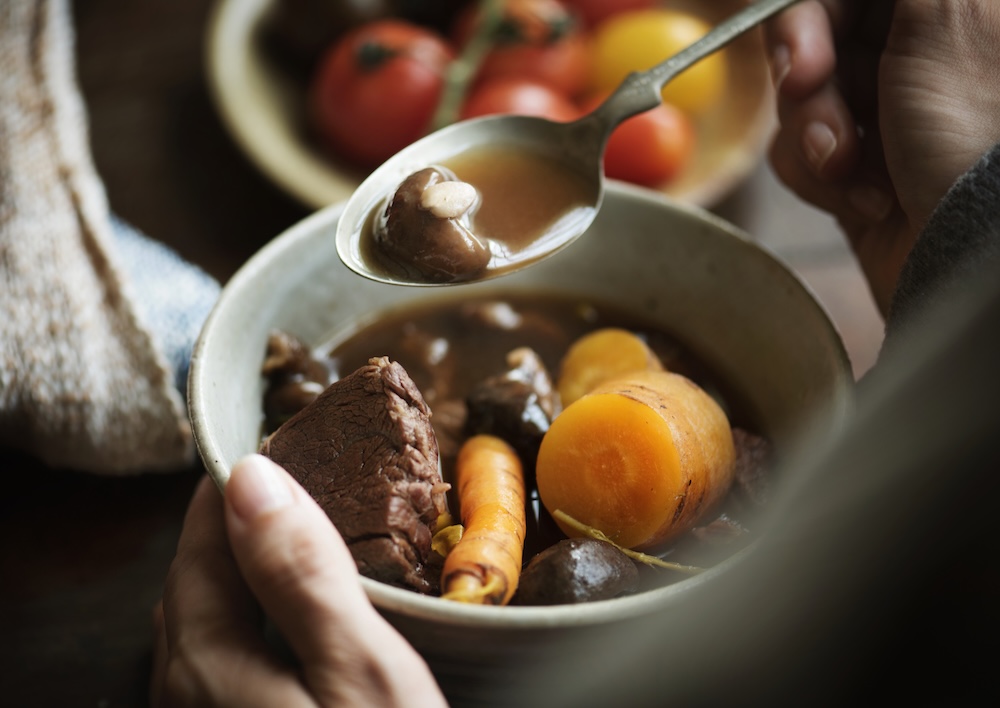
The dishes that recur in confinement kitchens earned their place through generations of attention. Ginger and sesame chicken offers warmth and easily absorbed protein. Traditional Korean Miyeok Guk (seaweed soup), high in iodine and iron, brings lactation support and gentleness to digestion. Steamed fish with ginger is one of the lightest, most digestible protein dishes for the early days. Red date and goji berry tea, a classic confinement drink, supports iron levels without being heavy.
Black vinegar pig trotters belong to the later confinement period. Warming, rich, and traditionally believed to support blood and joint recovery, they are also heavy, and most cooks introduce them from the second week onwards.
These are confinement food recipes for breastfeeding mothers that hold up.
How to Plan Confinement Meals for the First Two Weeks After a C-Section
The first two weeks divide naturally into two stages. Week one builds the foundation for recovery and lactation. The gentlest staples carry most of it: congee, delicate steamed fish, soft vegetables, warming broths. At DeRAMA, these come alongside iron-rich proteins such as Angus beef striploin and nutrient-dense seafood, so strength begins rebuilding from the earliest days. Week two brings in more substance: heartier soups, protein-rich dishes, and the iron-builders and lactation supporters in greater quantity.
A reasonable day might look like congee with a soft-boiled egg in the morning, sesame paste mid-morning, a vegetable and fish soup at lunch, herbal tea in the afternoon, a fuller protein dish in the evening, and a warming broth before bed. The progression matters as much as the dishes themselves.
Foods to Avoid During Confinement After a C-Section
Some foods work against what the body is trying to do. The reasoning is practical.
- Ice-cold and heavily chilled items: These are best set aside to protect a slower postpartum digestive system. Cutting fresh greens out entirely, though, can leave gaps in vitamins and fibre. At DeRAMA, the menu includes room-temperature salads with digestive-friendly vinaigrettes, so fresh produce is there without the strain of cold food on a recovering body.
- Spicy food: Heat passes through breast milk and can unsettle a newborn's digestion. The mother's own digestion is in no state for it either.
- Processed and high-sodium food: Salt drives swelling in a body already retaining fluid, and processed foods slow tissue repair without offering much in return.
- Excessive caffeine: Small amounts are usually fine, but caffeine passes into breast milk and can disturb a baby's sleep, which is already in short supply.
- Alcohol: It works against recovery and passes into breast milk, so most clinicians recommend setting it aside through this period.
Whether you observe this is personal. The instinct, favouring warmth in a depleted body, lines up with what surgical recovery wants anyway.
Chef-Led Confinement Nutrition at DeRAMA Singapore
Preparing meals like this, day in and day out, while caring for a newborn and recovering from surgery, is genuinely difficult. The dishes are precise, the timing matters, and palate fatigue arrives faster than anyone expects.
At DeRAMA, a luxury confinement centre in Singapore on the 12th floor of Artyzen Singapore, the meal programme is designed by chefs around these principles, with the variety and quality of a five-star kitchen. Ingredients are sourced for nutrient density. Preparation methods preserve what slow cooking is meant to. Menus rotate so each week tastes different from the last.
The meal programme sits within a broader programme alongside Korean postnatal massage by therapists from South Korea and newborn care by registered and enrolled nurses. As a postpartum care centre in Singapore, DeRAMA brings the considered intent of traditional confinement cooking together with modern support, so that mothers can focus on recovery rather than on the kitchen.