
The Golden Window: First 30 Days of Postpartum Recovery

본문
The Golden Window: Why the First 30 Days of Postpartum Recovery Matter Most
By the time your baby arrives, you will have planned for so much. What is easy to miss is how much your own body is about to do.
In the first 30 days after birth, the postpartum body moves through more change than at almost any other point in adult life. Hormones fall away within hours. Tissues knit and blood replenishes, quietly, beneath the surface.
There is a reason so many traditions treat this first month as something set apart. It has a name. The Golden Window. It describes the early postpartum period when the body's recovery capacity is at its highest, and when the foundations are laid for how a mother feels not just at six weeks, but for a long time afterwards. What happens here tends to echo.
What Is the Golden Window?
The Golden Window is the first 30 or so days after birth, when the body is most ready to recover and most in need of the conditions that let it. It is not a modern idea.
Across very different cultures, the same window appears again and again. The Chinese tradition of zuo yue zi, the sitting month. The Korean practice of sanhujori. The Latin American cuarentena, the 40 days. Each arrives, independently, at roughly the same span of dedicated rest, warming nutrition, and protected time.
What is striking is how much current understanding now mirrors what these traditions long understood. Rest, nourishment, and steady support are not indulgences during this time. They are what the work of postpartum recovery quietly runs on.
What Your Body Is Doing in the First 30 Days
Much of what makes this window matter is invisible. It helps to know what is happening.
Internal Recovery
In the days after birth, the uterus contracts steadily from around the size of a watermelon back towards the size of a pear, most of it in the first couple of weeks. Alongside it, the early postpartum bleeding gradually settles as the lining that supported your pregnancy is renewed. None of this is on show. It is simply happening, day by day, while you hold your baby.
The Abdominal Wall and Pelvic Floor
Pregnancy asks a great deal of the abdomen. The muscles stretch to make room, and in many women, they separate slightly down the middle, a common and natural change called diastasis recti. What many women think of as the after-pregnancy tummy is partly this: the abdominal muscles slowly drawing back together, along with skin and tissue that need time to recover.
The first 30 days are when the body is most responsive to gentle, intentional recovery work, long before there is any place for effortful postnatal exercise. The pelvic floor, which carried so much through pregnancy and birth, begins its most active phase of recovery here too.
Hormones, Energy, and Emotion
Within hours of birth, oestrogen and progesterone fall away sharply, and that single shift touches almost everything. Sleep, mood, energy, and milk supply all move with it. The emotional weather of the early weeks, tender one moment and steadier the next, is in large part this. Understanding that it is the body recalibrating takes some of the worry out of it.
Why These Weeks Shape the Months That Follow
Here is the part that is easy to underestimate. How the body is cared for in the Golden Window does not only shape how a mother feels at six weeks. It influences how she feels at six months, and sometimes well beyond.
When the abdominal wall and pelvic floor are given the conditions to recover gently and early, the lingering discomforts that can otherwise settle in, the niggling back ache, the weakness in the core, tend to be far easier to ease. Steady rest and good nutrition support the body's return to hormonal balance, which in turn affects sleep and energy for months to come. And the emotional steadiness that comes from being genuinely supported, rather than left to manage alone, matters more than almost anything.
The reverse holds too, quietly. Moving back into a full pace too soon often stores up difficulties that surface later and take far longer to ease than they would have at the start. It is simply a good reason to let these postpartum weeks be what they are.
What Considered Care in the Golden Window Looks Like
So what does it mean to care for this postpartum window well? A few things, working together.
Rest, properly defined. Not the snatched, fractured kind, but genuine, uninterrupted stretches of recovery sleep, made possible because someone you trust is watching over your baby while you do.
Nutrition that matches what the body is doing: protein as tissue knits, iron as blood replenishes, warm and easily taken food in the early days, broadening as appetite returns.
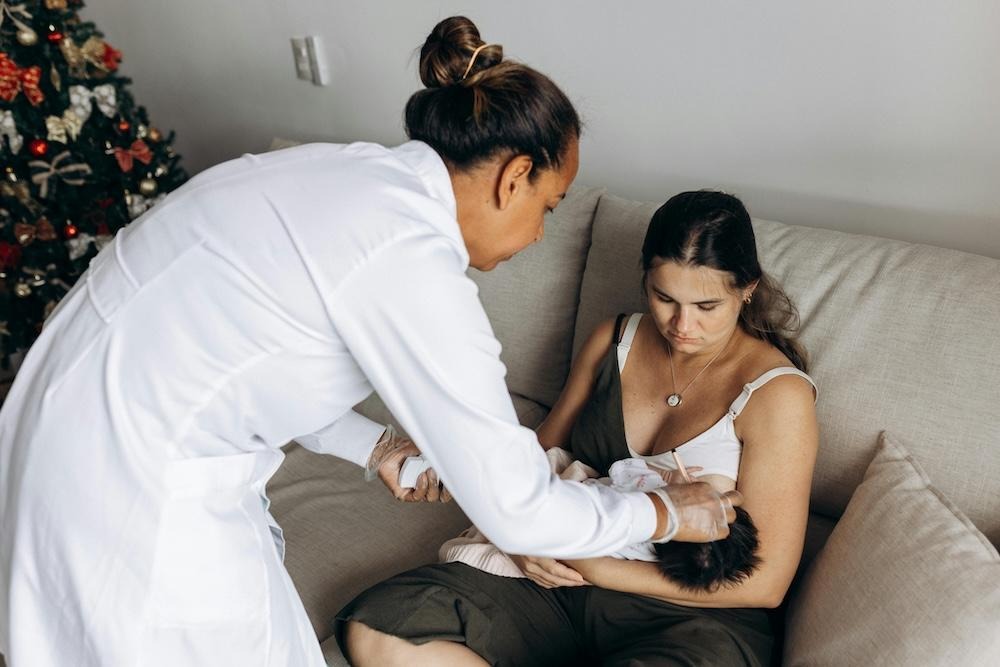
Newborn care by qualified professionals, so that a trained eye is watching over your baby through the most fragile early days, and you can rest without listening for every sound. The setting matters too. Light, quiet, comfort, and continuity of care all shape how deeply the body and mind can settle.
This is the model DeRAMA Singapore was built around. A luxury postnatal confinement stay designed for exactly this window, with registered and enrolled nurses on hand around the clock, authentic Korean postnatal massage in Singapore to support comfort and circulation, sitz baths in rooms specially fitted with units brought in from Korea, a menu curated specifically for postpartum recovery and prepared fresh by the hotel's chefs, and a calm sanctuary in which rest is finally possible. Every part of it exists for a reason, because the reasoning is the point.
A Window, Not a Race
The Golden Window is not a marketing idea. It is a real and time-limited phase of postpartum recovery, and how it is spent tends to stay with a mother long after the first month has passed. Understanding that is not meant to add pressure. If anything, it is permission to slow down and be cared for properly while it counts.
None of this has to be decided today. But if you are beginning to think about where and how you will recover, we would be glad to show you how DeRAMA's care is built around these first weeks. Learn more about our approach, or arrange a visit to see the space and meet the people who would be caring for you and your baby. Even an early conversation tends to make everything that follows feel clearer.